
5th IEEE International Multidisciplinary Conference on Engineering Technology IMCET 2026
April 15-17, 2026 (Online)

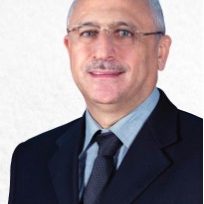
Dr. Haitham Abu-Rub
Title: Inverse Model Predictive Control for Power Electronic Converters
Advanced power electronic converters are increasingly required to perform multiple functions, such as renewable energy conversion, grid support, and electric drives. These capabilities necessitate adaptive and multi-objective control techniques that can accommodate fast dynamics, multiple control goals, and system uncertainties.
Model Predictive Control (MPC) has been widely explored for such applications due to its ability to predict system behavior and enforce constraints. However, its practical implementation is often limited by its high computational complexity. To address this challenge, Inverse Model Predictive Control (IMPC) is introduced as an alternative approach that maintains the advantages of MPC while significantly reducing computational load.
This talk provides an overview of IMPC and its implementation in power electronics convertersTo demonstrate the applicability of IMPC, several case studies will be presented, including grid-following and grid-forming inverters, as well as converter-fed drives. These examples highlight the potential of IMPC for various converter topologies.
Biography:
Haitham Abu-Rub is a professor at Hamad Bin Khalifa University and an adjunct professor at Texas A&M University, Qatar. He received two PhDs, one in electrical engineering from the Gdansk University of Technology, Poland, in 1995, and the second Ph.D. degree in humanities from Gdansk University, Poland, in 2004.
Abu-Rub has research and teaching experiences at many universities in many countries including Qatar, Palestine, Poland, USA, and Germany. His areas of expertise include power electronics converters and electric drives.
Abu-Rub has served for five years as the chair of Electrical and Computer Engineering Program at Texas A&M University at Qatar and for ten years as the managing director of the Smart Grid Center at the same university.
He is the recipient of many national and international awards and recognitions. He has contributed to publishing over 600 journal and conference papers, eight books, and eight book chapters.
Abu-Rub is a Fellow of IEEE and the Vice President for Publication at IEEE IES.
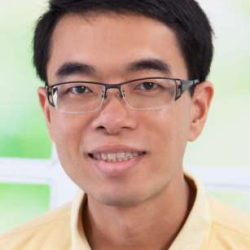
Dr. Kuan-Wei Lee
Title: Trends and Development of the Semiconductor Industry: Insights from Taiwan
The semiconductor industry has become a cornerstone of modern technology, underpinning advancements in information technology, artificial intelligence, communications, transportation, and energy systems. This talk presents an overview of current trends and development in the semiconductor industry, using Taiwan as a representative and influential case. The presentation begins with an introduction to semiconductor materials and their classifications, including elemental semiconductors such as silicon, compound semiconductors, and emerging materials for advanced electronic and optoelectronic applications. Their respective roles in logic, memory, power electronics, and sensing applications are briefly discussed to provide a common technical foundation for a multidisciplinary audience.
Taiwan’s strategic importance in the global semiconductor ecosystem is then examined from both technological and geopolitical perspectives. Owing to its highly concentrated manufacturing capacity, mature supply-chain clusters, and strong integration between academia, industry, and government, Taiwan occupies a pivotal position in global semiconductor production. This unique role has also placed Taiwan at the center of international discussions on supply-chain resilience, economic security, and geopolitical stability. Special attention is given to Taiwan Semiconductor Manufacturing Company (TSMC), which has played a decisive role in shaping the global foundry model. TSMC’s emphasis on pure-play manufacturing, large-scale capital investment, and advanced process integration has enabled rapid technology scaling while allowing fabless companies worldwide to focus on design innovation.
By combining advanced manufacturing capabilities, flexible industrial collaboration, and long-term strategic planning, Taiwan has established a competitive advantage that is difficult to replicate. The presentation concludes by discussing future challenges and opportunities facing the semiconductor industry, highlighting the implications for technology development, global collaboration, and multidisciplinary research.
Biography:
Dr. Kuan-Wei Lee received the PhD degree from the Department of Electrical Engineering, National Cheng-Kung University, Tainan, Taiwan, in 2006. He joined the Department of Electronic Engineering at I-Shou University as an assistant professor in 2006, was promoted to associate professor in August 2009, and was promoted to professor in February 2013. Professor Lee’s main research focuses on metal-oxidesemiconductor (MOS) technology and its application in GaAs-based electronic devices. He was elected a Distinguished Teaching Instructor by the College of Electrical and Information Engineering at I-Shou University in 2010. He also received the Outstanding Electrical Engineer Award from The Chinese Institute of Electrical Engineering (CIEE) in 2011 and was listed in Marquis 2011-2012, 2016-2017 Who’s Who in Science and Engineering. Dr. Lee has published 47 SCI journal papers and 126 conference articles. He has also delivered 8 invited talks and 8 keynote speeches at international conferences, and 6 keynote speeches at the universities. Meanwhile, Prof. Lee was a guest editor respectively for “Micromachines”, “Crystals”, “Molecules”, “Microelectronics Reliability”, and “Active and Passive Electronic Components”.
Research Expertise
- Semiconductor Manufacturing Process
- Thin Film Analysis and Application
- Oxidation Technology
- Microwave Devices
- Device Simulation and Analysis
Important Dates
- Regular Papers:
January 10, 2026February 10, 2026 - Notification of Acceptance: February 28, 2026
- Final Submissions Due: March 28, 2026
- Early Registration Closes: March 28, 2026

IMCET 2026